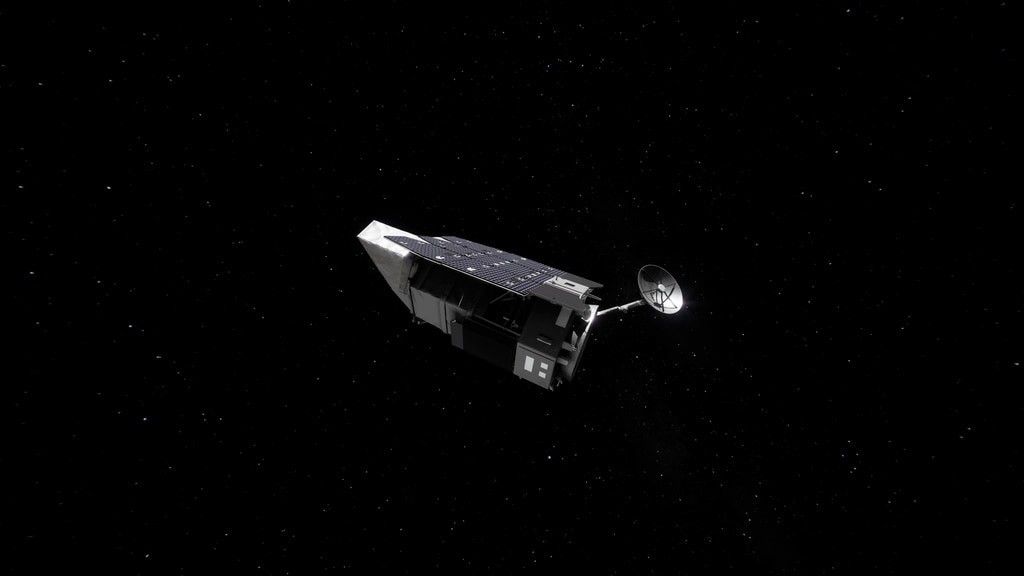
Exploring Cosmology, Exoplanets, and Infrared Astrophysics at 100x the scale of Hubble

Delving into the mysteries of dark energy

The Roman Space Telescope will delve into the mystery of dark energy by studying how the distribution of galaxies and dark matter has changed throughout cosmic history.

Discovering thousands of exoplanets

The Roman Space Telescope will complete the statistical census of planetary systems in the galaxy by using microlensing, the universe’s own magnifying glass, to find thousands of exoplanets.

Leading future exoplanet missions

The Roman Space Telescope will use a technique called coronagraphy to block the glaring light of exoplanet host stars to directly see planets and planet-forming disks. The Coronagraph Instrument is an advanced technology demonstrator for future exoplanet missions.

The Cycle 1 results have been announced! See the list of approved programs here.

Roman is set to launch on August 30, 2026!

Join the Roman Science Collaboration!

Important Dates
  • August 20, 2026
    • Virtual Lecture Series: Andrew Benson (Carnegie), TBA
      4-4:30 PM EDT/1-1:30 PM PDT
  • August 30, 2026
Recent Site Updates

Previous Updates

Latest News
Roman survey infographic v2 gbs euclid

Euclid View of Milky Way Heart Previews Core Survey by NASA’s Roman

A new look at the heart of our Milky Way galaxy by Euclid, an ESA (European Space Agency) mission with NASA contributions, overlaps with a region scientists will observe with NASA’s Nancy Grace Roman Space Telescope, launching later this summer. This sneak peek gives astronomers a major jumpstart on a core Roman survey, helping scientists learn more than they could from either telescope alone.

The Roman Space Telescope and IPAC

Caltech/IPAC hosts the Roman Science Support Center (SSC). The responsibilities of the SSC include Coronagraph Instrument operations, science level processing of spectroscopic and microlensing WFI data, General Astrophysics proposal and grants management, and community engagement. The SSC also curates up to date telescope and instrument parameters and Roman science simulations and tools for the scientific community.